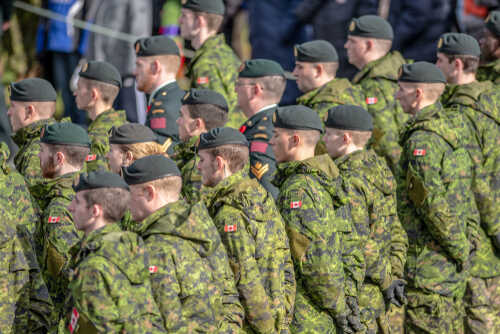
In a historic move not seen since before World War I, Canada’s military has confirmed the development of a theoretical defense model addressing a potential U.S. invasion. This unprecedented planning exercise, which includes strategies for asymmetric warfare and requests for NATO support, highlights the strategic anxieties triggered by President Trump’s “America First” rhetoric and his recent suggestions of territorial expansion. The move represents a fundamental shift in North American security, forcing a re-evaluation of long-standing continental alliances.
Story Snapshot
- Canadian Armed Forces created first U.S. invasion defense model in 100+ years amid Trump’s territorial sovereignty statements
- Plan includes guerrilla warfare tactics inspired by Afghan Mujahideen and requests European NATO military support
- Canada’s military faces massive disadvantage with only 66,000 active personnel versus America’s 1.3 million troops
- Canadian public opinion shifted dramatically with majority now viewing U.S. as greatest threat after years of alliance stability
Canada’s Unprecedented Defense Planning
Canadian military officials confirmed development of a theoretical defense model addressing potential U.S. military action, marking the first such planning exercise since before World War I. The model outlines asymmetric warfare strategies including drone operations, guerrilla-style ambushes, and sabotage tactics similar to those employed by Afghan fighters against Soviet forces. Canadian planners estimate they would have a maximum three months to prepare, with U.S. forces potentially capable of seizing strategic positions within two days. Officials emphasized the plan remains purely theoretical and precautionary.
Stark Military Reality Check
The planning exercise exposes a fundamental power imbalance that should give any reasonable observer pause about Canada’s defensive posture. Canada fields approximately 66,000 regular force members and 25,000 reservists, dwarfed by America’s 1.3 million active-duty personnel. This massive disparity explains why Canadian strategists envision unconventional warfare rather than traditional military engagement. The model includes requests for military support from France, Germany, and the United Kingdom, essentially admitting Canada cannot independently defend its sovereignty without European intervention from NATO partners.
Canada prepares for a hypothetical U.S. military invasion for the first time in 100 years
—The Globe and Mail🇺🇸🇨🇦 pic.twitter.com/ZtYBlicXd7— Republicans against Trump (@RpsAgainstTrump) January 21, 2026
Context Behind The Planning
This military modeling emerged after President Trump repeatedly referenced acquiring Canada and Greenland for strategic security purposes during 2025 and early 2026. Canadian Prime Minister Mark Carney publicly responded by affirming support for Greenland and Danish sovereignty, stating Canada stands firmly with Denmark’s right to determine Greenland’s future. French and German forces deployed to Greenland in recent weeks, while Canadian public opinion shifted dramatically with summer 2025 polling showing most Canadians now view America as their country’s greatest threat—a remarkable reversal for nations sharing the world’s longest undefended border.
Analysis and Strategic Implications
Retired Major-General David Fraser, who led Canadian troops in Afghanistan, acknowledged the situation as “abnormal” but emphasized that any attack on Canada would trigger an international response, potentially including German naval vessels and British aircraft defending Canadian sovereignty. University of Toronto political scientist Aisha Ahmad argued the defensive preparation serves a deterrent function, suggesting military readiness actually reduces conflict probability. Retired Lieutenant-General Mike Day dismissed the invasion scenario as “fanciful,” while Canadian officials stressed U.S. invasion remains unlikely despite the planning. Military cooperation continues between both nations, including joint NORAD exercises conducted in Greenland this week.
Canadian Armed Forces recruitment has increased following years of declining enlistment, indicating public concern is translating into tangible defense interest. This unprecedented military planning represents a fundamental shift in North American security architecture, driven by concerns over Trump’s stated territorial ambitions. While both military and political officials characterize actual conflict as improbable, the mere existence of such planning reveals how Trump’s unapologetic pursuit of American interests has forced traditional allies to confront uncomfortable strategic realities and question long-standing assumptions about continental security arrangements.
Watch the report: Canada’s military preparing hypothetical US invasion possibility: report