
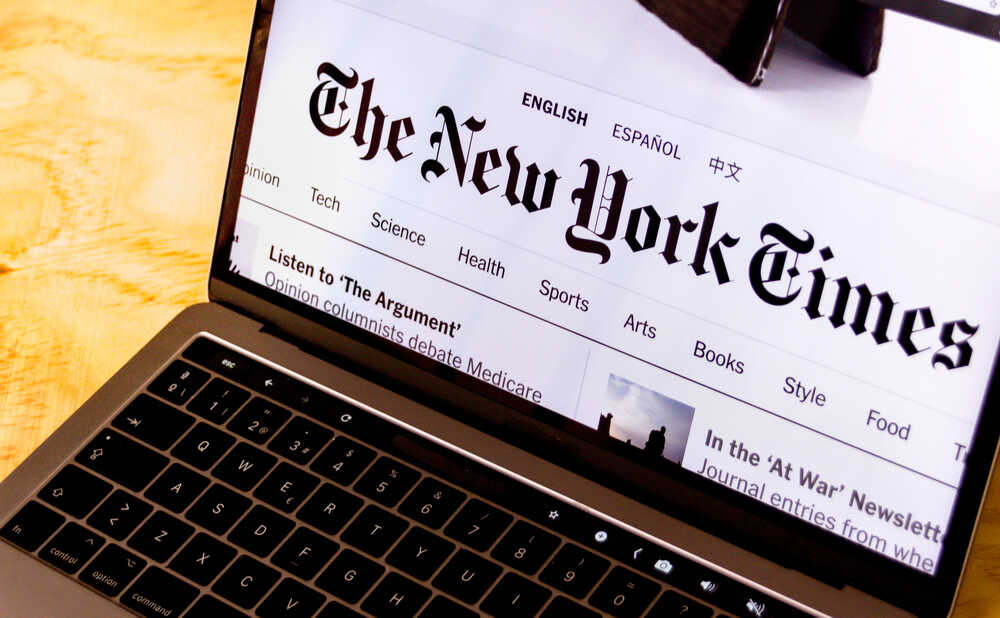
The New York Times is under fire for downplaying anti-Christian motives in a Minnesota school shooting, sparking outrage over biased headline framing.
At a Glance
- NYT omitted anti-religious motives from its initial shooting coverage
- Shooter’s manifesto showed explicit hatred toward Christians and churches
- FBI classified the event as an anti-religious hate crime
- Critics accuse mainstream media of minimizing anti-Christian violence
- Conservatives demand equal attention to faith-based attacks
NYT Faces Fire Over Framing Choices
Conservative commentator Mary Katherine Ham has ignited a firestorm over The New York Times’ coverage of a deadly Minneapolis school shooting, accusing the outlet of deliberately sanitizing the shooter’s motivations. Ham pointed to the NYT’s vague headline and omission of the attacker’s anti-Christian bias as part of a troubling media trend.
Watch now: [Mary Katherine Ham Blasts NYT’s Minneapolis Shooting Coverage]
According to Ham, the Times and other mainstream outlets have adopted a pattern of suppressing religiously motivated hate crimes, particularly when they target Christians. Her critique emphasized that the media’s editorial choices obscure the religious targeting, reducing public awareness of faith-based violence and protecting dominant political narratives.
Shooter’s Manifesto Lays It Bare
Authorities revealed that the Minneapolis shooter posted a manifesto timed to coincide with the attack, clearly expressing animosity toward Christian institutions and broader faith communities. The shooter specifically selected a Christian school and nearby church as his targets, citing religious disdain as the primary motive.
The FBI has since confirmed the incident qualifies as an anti-religious hate crime under federal definitions. The manifesto was not only ideological—it was strategic, written with the intent to provoke fear among religious Americans. Critics argue that this kind of clear-cut evidence should have dominated headlines, but instead received muted treatment in major outlets.
Growing Pattern of Religious Targeting
The attack in Minneapolis joins a growing list of recent violent incidents against Christian organizations nationwide. From vandalized churches to targeted shootings, religiously motivated attacks are rising—but media acknowledgment remains sparse.
Ham and others argue that the reluctance to classify anti-Christian violence as terrorism reveals a deeper editorial agenda. Headlines often neutralize such acts as generalized tragedies rather than ideologically driven assaults on faith groups. The shooter’s detailed hatred for Christians, as outlined in his manifesto, underscores just how far some media will go to avoid naming the motive.
Political Echoes and Conservative Outcry
The backlash has resonated among conservatives and religious leaders who say they’ve long witnessed media bias against faith communities. Ham’s critique tapped into broader frustrations about how mainstream journalism frames religious Americans—often as aggressors, rarely as victims.
The New York Times’ editorial decision is seen not as an isolated mistake, but as part of a systemic editorial approach that aligns with progressive narratives. By softening or ignoring the religious aspect of the attack, critics claim the press is eroding the public’s ability to recognize and respond to emerging patterns of anti-Christian violence.
Sources
The New York Times
FBI
Washington Examiner
Fox News
National Review