Vice President JD Vance defended President Trump’s $5,000 “dividend” pledge as a share of American prosperity, while critics rushed to brand it a scam and impossible to fund.
Story Highlights
- Trump promised $5,000 to every adult citizen if Republicans win both chambers of Congress.
- Vance said the payment reflects shared prosperity and pointed to tariff revenue as a funding path.
- Analysts estimated a roughly $1.2 trillion price tag, far above current tariff receipts cited in reports.
- Skeptics, including some Republicans, questioned cost, legality, and inflation risk.
What Trump Promised And The Condition He Set
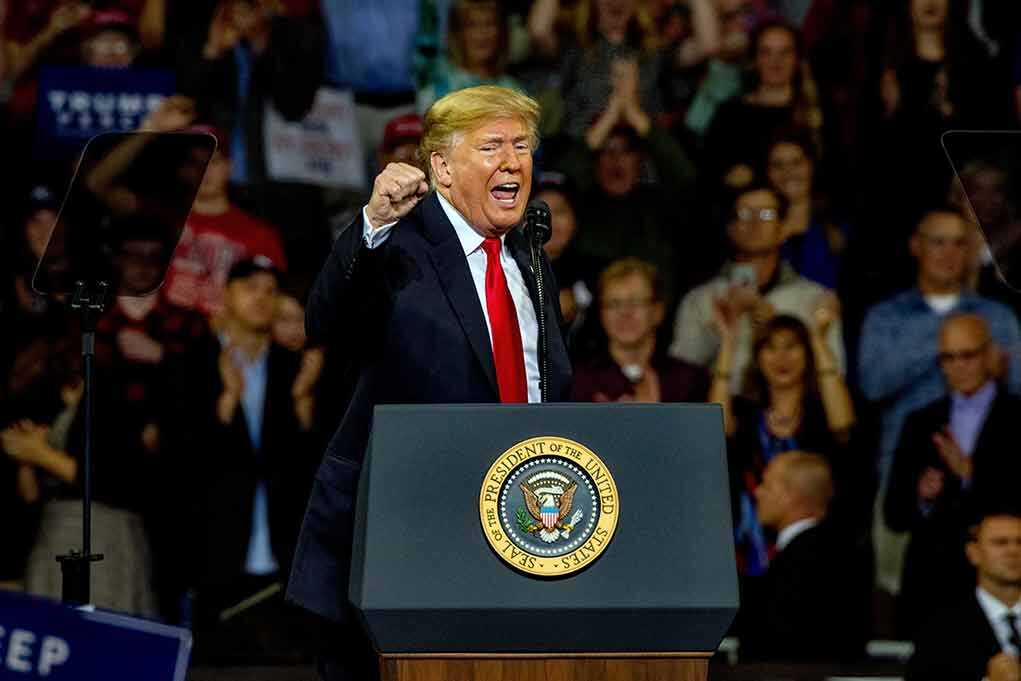
President Trump told voters he would issue a $5,000 payment to every adult citizen if Republicans win both the House and the Senate. He made the pledge on the record and tied it to election results, making it a clear, dated commitment rather than an offhand remark. The promise offered a simple, direct benefit to families that have battled high prices and energy costs for years. Trump did not provide legal or budget details during the announcement.
Reporters documented the remarks and the contingency. Coverage emphasized that the offer depends on voters giving Republicans full control, not on existing law or a set timeline. That framing matters because it places the first step with the electorate, then with Congress for any appropriation. The conditional nature sets expectations and keeps the White House message focused on growth, trade, and restoring gains to working households that carried the brunt of inflation in recent years.
How Vance Framed The “Dividend” And The Funding Theory
Vice President JD Vance said the goal is to let Americans share in prosperity they helped create. He argued that strong growth and a tougher trade stance generated revenue that should flow back to citizens. Vance suggested tariff receipts could help fund the plan, and emphasized spending would occur at home, boosting communities and small businesses. The White House released his remarks, signaling the administration stands behind this framing and wants voters to hear it directly.
Reuters noted that tariff collections so far this fiscal year reached $167 billion, giving Vance a concrete reference point. But analysts put the total cost of a $5,000 payment to all adults near $1.2 trillion, which far exceeds current-year tariff revenue. That gap underscores the need for legislation and prioritization. Vance’s defense connects the dots on growth and trade, but the mechanics would still require Congress to define eligibility, timing, and the exact source of funds.
The Big Questions: Cost, Law, And Inflation Risk
Policy experts spotlighted three hurdles: the price tag, the legal path, and inflation. The estimated cost dwarfs tariff receipts cited by reporters, so Congress would likely need to combine revenues or phase payments. Legal analysts said broad direct payments usually require congressional appropriation. Some Republicans voiced concern that another cash transfer could fuel prices after years of heavy spending. These cautions do not cancel the pledge, but they mark the steps that must be addressed to turn it into law.
Critics moved fast to claim the idea was a bribe or impossible. That rhetoric ignores two facts on the record: Trump tied the offer to a republican win, and the administration has built real tariff inflows. The key test is process, not slogans. A responsible path would set clear guardrails, define who qualifies, match timing to revenue, and avoid adding to deficits. That approach aligns with conservative aims: reward work, protect taxpayers, and keep Washington within the Constitution.
What Conservatives Should Watch Next
Voters should watch for a bill text that spells out eligibility and authority. A House draft could phase payments, use a threshold for higher earners, and anchor funding to trade receipts and savings. Treasury and the Office of Management and Budget should release a scoring memo to prove the math works without stoking inflation. If Congress moves, the plan can reflect core values: growth first, debt down, help for working families, and no blank checks for bureaucracy.
Sources:
mediaite.com, internazionale.it, youtube.com, rmb.reuters.com