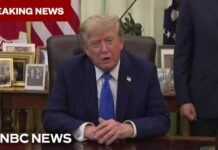


The WNBA’s own contract says only women can play in the league, but it never says what a woman actually is — and two former NBA players just called that bluff by declaring for the 2027 draft.
Story Snapshot
- The WNBA’s 2026 labor agreement says “only players who are women are eligible to play,” but includes no definition of “women.”
- Former NBA players Enes Kanter Freedom and Royce White both declared for the 2027 WNBA draft, saying they identify as women.
- League officials have not answered repeated requests to explain how eligibility would actually be decided.
- Commissioner Cathy Engelbert says the league will “continue discussing” transgender participation instead of issuing a clear rule.
- The NCAA already adopted a detailed sex-based eligibility policy in 2025, making the WNBA’s silence look glaring by comparison.
A Rulebook With A Massive Hole In It
Article 13, Section 1 of the WNBA’s collective bargaining agreement is short and blunt: “Only players who are women are eligible to play in the WNBA.” That sounds simple. But nowhere in the document does the league define what “women” means. The words “transgender” and “gender identity” do not appear anywhere in the contract at all.
A legal review of women’s pro sports labor deals confirmed the WNBA has kept this same vague language since 2020, never updating it to address sex-based eligibility disputes that other leagues have already tackled head-on. That gap left the door wide open for anyone willing to test it.
That’s exactly what happened. Enes Kanter Freedom, a 6-foot-10, 250-pound former NBA center, announced he is declaring for the 2027 WNBA draft, citing the league’s own lack of a defined eligibility standard. Former NBA first-round pick Royce White made the same move, saying he would identify as a woman for draft purposes.
League Goes Silent Instead Of Answering
Reporters pressed the WNBA for a straight answer. Instead of clarity, they got nothing. Multiple outlets reported the league “did not respond to multiple requests” to explain how it would handle eligibility questions raised by the two players. That silence is the real story here — a multibillion-dollar professional league can’t or won’t say what qualifies someone to play in its own women’s competition.
Commissioner Cathy Engelbert eventually sent out a memo, but it offered no fix. She said eligibility rules are collectively bargained and that the league will keep “discussing” the issue with the players’ union rather than settling it. For fans who just want a straight rule, “we’ll keep talking about it” isn’t an answer.
To be clear, no evidence shows the WNBA has actually accepted either player’s declaration or treated self-identification as sufficient to make them eligible. The claims by Kanter Freedom and White rest on their own reading of a blank space in the contract, not on any league ruling. That distinction matters, but it doesn’t erase the deeper problem: the league still has no rule to point to that settles the question either way.
Other Leagues Already Drew The Line
The contrast with other sports organizations makes the WNBA’s inaction look worse. The NCAA rolled out a detailed participation policy in February 2025 that governs transgender athlete eligibility sport by sport, based on biological sex and puberty status. The Supreme Court’s 2026 ruling in West Virginia v. B.P.J. also affirmed that schools can separate teams by biological sex under Title IX, reinforcing that “sex” means sex assigned at birth, not gender identity.
Even the National Women’s Soccer League has admitted it’s still “monitoring” the issue without a firm policy of its own, showing this confusion isn’t unique to basketball. But the WNBA has had years and a fresh 2026 labor deal to fix this and chose not to.
Former NBA first-round pick Royce White had announced plans to enter the 2027 WNBA Draft, saying he would identify as transgender for the purpose of challenging the league’s eligibility rules. In an interview with Fox News, the 35-year-old former player and Republican U.S. Senate…
— Tomson (@TomsonWoo) August 9, 2026
The players’ union, meanwhile, put out a statement stressing “diversity and inclusion” and insisting players won’t be used as “political pawns.” That’s a nice sentiment, but it sidesteps the actual question fans and parents are asking: does “women’s basketball” mean anything specific, or does it mean whoever says it applies to them? Until the WNBA answers that in writing, every headline-grabbing declaration like this one will keep filling the void the league itself created.
Sources:
x.com, sports.yahoo.com, washingtontimes.com, jdsupra.com, espn.com, nytimes.com, facebook.com, foxnews.com, timesnownews.com