President Trump’s threat to cut off trade with Spain shows how quickly an “ally” dispute can turn into economic warfare when NATO partners refuse to support U.S. military operations.
Quick Take
- Trump warned Spain of a full trade cutoff after Prime Minister Pedro Sánchez restricted U.S. access to Spanish bases for operations tied to the Iran conflict.
- The dispute centers on Morón Air Base and Naval Station Rota, long-standing hubs for U.S. power projection across Europe, Africa, and the Middle East.
- Trump tied Spain’s refusal to broader frustration with NATO burden-sharing, criticizing Madrid’s defense spending shortfalls.
- Spain rejected the pressure, arguing base use must comply with international law and existing trade agreements.
Trump’s Trade Threat Raises the Stakes With a NATO Ally
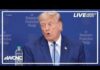
President Donald Trump escalated a diplomatic fight with Spain after Spanish Prime Minister Pedro Sánchez denied U.S. access to key bases for strikes connected to the Iran conflict. Standing beside German Chancellor Friedrich Merz at the White House, Trump said the U.S. could “cut off all trade with Spain” and described Spain as uncooperative. Trump also broadened his criticism to the United Kingdom, citing similar restrictions by Prime Minister Keir Starmer.
Sánchez’s position hinges on legality and sovereignty: Spain wants any cooperation to align with the U.N. Charter and international law. That framing matters because it places Washington and Madrid on opposite sides of a question that has split Western alliances before—whether U.S.-led military action is sufficiently authorized and constrained. Spain’s government portrayed its refusal as a principled line, not a break with NATO membership.
Why Morón and Rota Matter to U.S. Military Planning
U.S. military access in Spain is not symbolic. Morón Air Base and Naval Station Rota have supported American operations for decades, with agreements stretching back to the 1950s and later formalized arrangements that shaped today’s posture. These installations function as logistical and operational nodes for missions spanning Europe, Africa, and the Middle East. When access is restricted, planners lose time, flexibility, and redundancy—three things that become priceless during active conflict.
Trump’s comments that the U.S. could potentially use the bases “unilaterally” drew attention because they collide with the reality of host-nation consent. Even when U.S. forces have a durable presence, access conditions still flow through agreements and political approvals. It does not describe any implemented plan to bypass Spain’s government, and as of late March 2026, there was no confirmed follow-through on either an embargo or a unilateral base action.
NATO Burden-Sharing Is the Pressure Point Behind the Rhetoric
Trump connected the base dispute to defense spending—an argument familiar to voters who want allies to pay their share instead of leaning on American taxpayers. It highlights Spain’s lag behind the NATO benchmark of 2% of GDP, with Trump pressing for much higher targets in his broader NATO messaging. That linkage is politically potent at home: it reframes Spain’s refusal not as a single disagreement over Iran, but as part of a pattern of dependency.
From a conservative perspective, the political logic is straightforward: when an ally benefits from U.S. protection yet blocks U.S. operations during a crisis, Washington will look for leverage. Trade threats are one form of leverage, but they also invite questions about consistency and limits. It notes that Spain quickly pushed back by referencing international trade agreements, and observers pointed out that the European Union’s trade framework could complicate any attempt at a country-specific cutoff.
Economic Fallout Remains Unclear as Markets Shrug Off the Clash
Despite the sharp language, immediate economic panic did not appear in Spain’s markets; it cited Spain’s Ibex 35 index rising after the confrontation. That does not mean the risk is imaginary—only that investors may be pricing in low odds of near-term action or expecting negotiations to cool tensions. It also notes Spain’s role as a meaningful trade partner, and that any “cut off all trade” approach would be a major step, not a routine tariff tweak.
The bigger takeaway is institutional, not personal: this episode illustrates how quickly the U.S. foreign-policy machine can collide with public skepticism—on the right and the left—about endless overseas commitments. Conservatives frustrated by globalism see an ally refusing support while still relying on U.S. defense guarantees. Liberals wary of unilateral war see Spain’s restriction as a check on escalation. Either way, the standoff feeds the shared belief that ordinary citizens absorb the costs while elites bargain behind closed doors.
Sources:
https://www.stripes.com/theaters/europe/2026-03-03/trump-us-military-access-spain-20939996.html