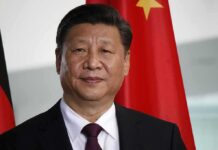
Japan’s bond market shock over debt-funded gasoline subsidies is a fresh warning about the real cost of big-government “freebies” that conservatives have fought for years.
Story Snapshot
- Reports tied a historic Japanese bond selloff to plans for debt-funded gasoline subsidies under Prime Minister Sanae Takaichi [1].
- Government assurances about market monitoring and possible supplementary budgets briefly calmed volatility [1].
- An asset manager argued fears of Takaichi’s fiscal stance may be overstated and debt metrics could still improve [1].
- Critics warned additional stimulus risks fueling a broader debt crisis narrative around Japan [2].
Bond Rout Linked To Debt-Funded Subsidies
Bloomberg reporting described a historic selloff in Japanese government bonds as investors reacted to signals that Prime Minister Sanae Takaichi would issue more debt to finance gasoline subsidies, stoking fears about long‑term fiscal discipline [1]. The coverage said the turmoil was partly calmed by government assurances of market monitoring and talk of supplementary budgets, indicating officials were engaged and not abandoning intervention tools [1]. The immediate trigger centered on consumer fuel relief, yet market focus turned to the sustainability of Japan’s already large public debt burden and its sensitivity to rising yields [1].
The reporting and commentary emphasized that the plan is framed as near‑term cost relief for households rather than a structural spending surge, but investors lacked specifics on duration, size, and legal footing of the subsidy [1]. Absent a cabinet decision or finance ministry paper, markets priced worst‑case scenarios, a pattern common in high‑debt economies when details are thin [1]. The vacuum amplified skepticism and made the subsidy appear as a litmus test for fiscal credibility, overshadowing intended consumer benefits. That imbalance fueled volatility and headline risk beyond Japan’s borders [1].
Competing Narratives On Fiscal Risk
Market participant Mark Dowding of RBC Global Asset Management said concerns about Takaichi’s fiscal plans may be exaggerated and argued Japan’s economy is doing well, with expectations that debt‑to‑gross domestic product may continue declining this year [1]. That view suggests the selloff overstated immediate danger and that policymakers still possess room to manage funding and stabilize markets [1]. By contrast, analyst Robin Brooks framed Japan as nearing the “end of the road,” warning that more stimulus means more debt and the risk of a debt crisis, reinforcing a harsher narrative [2].
These opposing messages reflect a familiar split: short‑term relief measures pitched as consumer support are recast by markets as a referendum on debt sustainability. Without official subsidy terms, critics can argue slippage, while supporters point to manageable trajectories and administrative capacity to intervene [1][2]. The debate exposed how headline‑driven bond volatility can eclipse the policy’s stated goal. It also showed how institutional commentary, even when measured, can be swept into broader media arcs that favor alarm over nuance, especially when yields jump quickly [1][2].
Why It Matters For American Readers
Energy subsidies abroad may feel distant, but the lesson is immediate: when politicians paper over prices with debt, someone pays later. Japan’s episode underscores how fast markets punish fuzzy math and open‑ended promises, especially when debt is already high [1][2]. American families learned this during years of inflation and energy spikes. The conservative answer remains stable supply, permitting, and production—not budget gimmicks that hide costs and invite currency and bond stress that eventually boomerang onto taxpayers and retirees.
For the United States under President Trump’s second term, the priority is reliable domestic energy, disciplined spending, and transparency about program scope and funding. Japan’s situation shows that even “temporary” subsidies can trigger market doubts if details are missing, timelines slip, or exit ramps are unclear [1]. Conservatives should demand clear statutory caps, sunsets, and pay‑fors here at home, and resist feel‑good handouts that mask structural problems. Debt‑financed relief is easy politics but hard economics once interest costs climb.
What We Know—and What We Do Not
The available reporting ties the bond shock to plans for debt‑funded gasoline subsidies and notes that assurances of monitoring and supplementary budgets temporarily steadied conditions [1]. Commentary from an asset manager counters that fiscal fears may be overstated and highlights a potentially improving debt ratio, pointing to residual policy space [1]. A separate analysis warns that added stimulus risks compounding a debt problem and feeding a crisis narrative, especially with volatile yields [2]. These points are documented in the supplied sources.
Japanese Bonds Crater After PM Takaichi Prepares To Issue Much More Debt To Pay For Gasoline Subsidies https://t.co/nnVxs0WINx pic.twitter.com/kEP01PPYd8
— Matt Davio (@MissTrade) May 19, 2026
Critical details remain missing. No cabinet statement, budget bill, or finance ministry release defines the subsidy’s size, duration, or legal authority in the record provided [1][2]. Without those, it is impossible to quantify the true fiscal footprint, debt‑service path, or market absorption needs. That uncertainty justifies caution in interpreting the selloff and invites disciplined skepticism toward claims on both extremes. Until the government publishes specifics, any precise fiscal impact assessment would be speculative based on the current materials.
Sources:
[1] YouTube – PM Takaichi’s fiscal concerns are overblown: RBC Global …
[2] Web – The End of the Road for Japan – Robin J Brooks – Substack