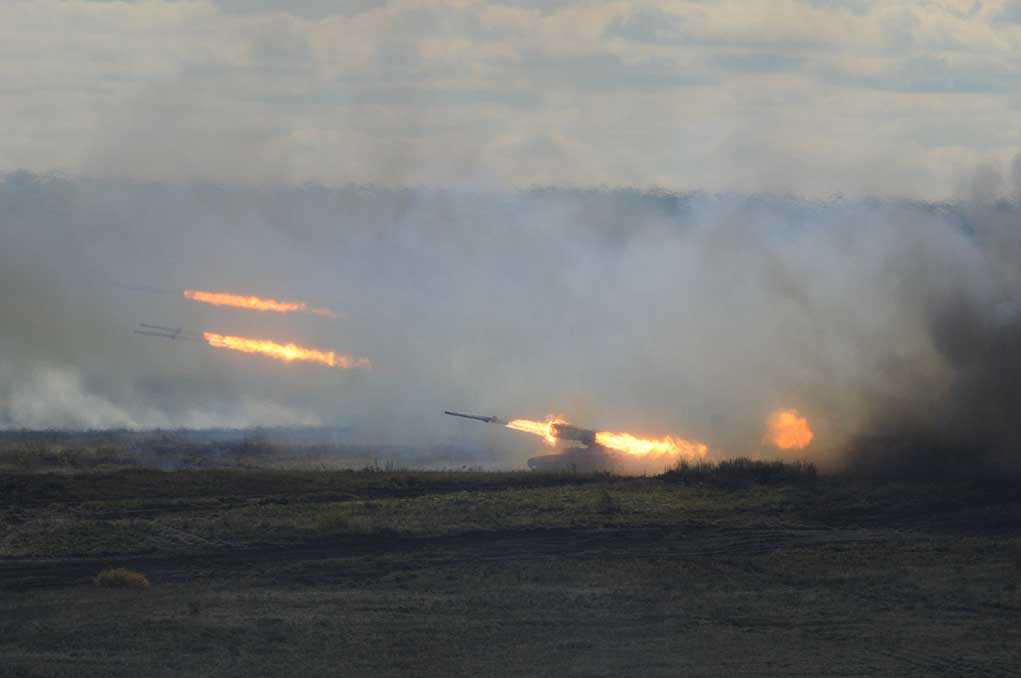
The U.S. Army has locked long-range fires at the center of its modernization drive, aiming to hit enemy targets from hundreds to thousands of kilometers away, even as some programs face bumps documented by federal watchdogs.
Story Snapshot
- Army leaders made long-range precision fires a top modernization priority to counter near-peer threats.
- Four systems target gaps: a canceled extended-range cannon, a new precision missile, a mid-range launcher, and a hypersonic weapon.
- Planned ranges stretch from 70 kilometers for artillery to more than 2,000 kilometers for missiles.
- Watchdogs reported mixed progress, including hypersonic test failures before later success and gaps in business-case rigor.
Army Makes Range and Precision a Core Warfighting Priority
Government Accountability Office records show the Army placed long-range precision fires among its six main modernization priorities to restore edge in range, lethality, and targeting. This move responds to near-peer threats that can strike U.S. forces from great distance. The Army strategy seeks harder-hitting fires that reach farther, shoot faster, and find targets quicker. That push aligns with President Trump’s security goals to deter China, back allies, and keep American forces dominant in the Pacific theater.
Auditors reported that the Army linked its fires plan to a clear set of capability gaps and matched them to named systems. The portfolio includes the Precision Strike Missile, the Mid-Range Capability that employs familiar Navy missiles, and the Long-Range Hypersonic Weapon. A now-canceled extended-range cannon effort had aimed to double artillery reach. The mix shows a plan to layer ranges and complicate enemy defenses rather than bet on a single system or one shot answer.
What the New Systems Aim to Deliver on the Pacific Front
Officials briefed watchdogs that the Army seeks to push artillery range from about 30 kilometers to about 70 kilometers. Three missile families expand reach far beyond that, from roughly 500 kilometers out past 2,000 kilometers. That span lets ground units hold key enemy nodes at risk: ship groups, air bases, radar sites, and logistics hubs. Hitting those targets at range supports sea and air forces, stiffens island defenses, and raises the cost of any attack on our allies and our troops.
Precision Strike Missile replaces older Army Tactical Missile System rounds with more reach and growth room. Mid-Range Capability fields a land launcher for Standard Missile 6 and Tomahawk to hit ships or land targets and to stress enemy air defense. Long-Range Hypersonic Weapon promises a very rapid strike against high-value targets. Together, they aim to punch through anti-access bubbles, help regain sea lanes, and give commanders flexible options in the First Island Chain.
Hard Truths: Cancellations, Test Bumps, and Documentation Gaps
Watchdogs said the Army had mixed success in rapid development. The extended-range cannon effort faced the most trouble and was canceled because it could not deliver the volume of fire the Army required. The hypersonic program suffered several test failures before a later successful flight let work continue. These facts prove the technology is hard and show why tight oversight and strong engineering are vital to field real combat power on time and at scale.
Auditors also flagged that some business-case and digital-engineering support was not fully documented. They urged the Army to assess practicality, benefits, and affordability for iterative development, and to furnish the records behind those claims. That push matters for taxpayers who demand results, not buzzwords. It also backs President Trump’s focus on strong but efficient defense that cuts waste, speeds delivery, and keeps America’s edge without feeding bloated processes.
Why It Matters for Deterrence Against China
Congressional research frames long-range ground fires as a response to Russian and Chinese anti-access strategies and notes that China was never bound by the old missile treaty. Land-based missiles let U.S. commanders hold fixed and moving targets at risk from dispersed launchers that can move, hide, and reload. That posture complicates enemy targeting and supports joint kill chains across air, land, sea, space, and cyber, which is exactly what the Pacific fight will demand.
The public record does not prove sustained performance against full Chinese countermeasures, since much evidence is classified or still developing. Still, the Army’s move to layer ranges, add mobility, and speed targeting addresses a real and present need. The task now is clear: validate performance in tough exercises, scale production, secure munitions supply, and keep costs honest. Do that, and America’s soldiers will carry a longer reach and a harder punch where it counts.
Sources:
militarytimes.com, files.gao.gov, gao.gov