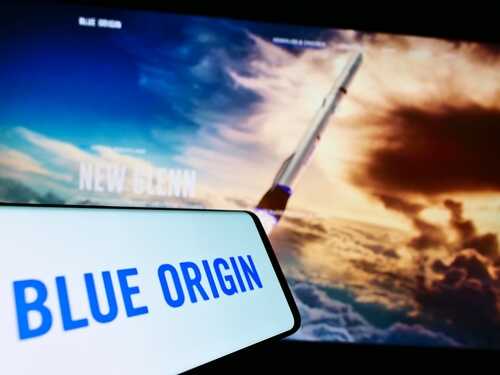
On December 20, 2025, Blue Origin’s New Shepard NS-37 mission made history by carrying the first space traveler who uses a wheelchair above the Kármán line. While this milestone is being hailed as a win for inclusion and private innovation, it also brings conservative-minded questions of cost, light regulation, accountability, and the gap between luxury space tourism and the interests of everyday Americans sharply into focus.
Story Snapshot
- Blue Origin’s latest New Shepard flight carried the first space traveler who uses a wheelchair above the Kármán line.
- The NS-37 mission showcases private innovation but also raises questions about costs, access, and media spin.
- Commercial spaceflight remains lightly regulated, leaving risk, liability, and safety largely to corporate discretion.
- Conservatives can welcome engineering progress while demanding transparency, accountability, and taxpayer protection.
Historic Blue Origin Flight Puts Wheelchair-Using Tourist Above the Kármán Line
On December 20, 2025, Blue Origin’s New Shepard NS-37 mission lifted off from Launch Site One in rural West Texas, carrying six private passengers on a short suborbital hop marketed as the adventure of a lifetime. The capsule’s brief journey above the Kármán line, roughly 100 kilometers up, made headlines because one passenger uses a wheelchair, marking the first time a wheelchair user has crossed that internationally recognized boundary of space on any government or commercial flight.
During the roughly ten-to-eleven-minute mission, the single-stage reusable booster pushed the capsule to space, separated, and then executed an autonomous powered landing back in West Texas while the crew compartment continued on a ballistic arc. Inside, the six tourists experienced just a few minutes of weightlessness, unstrapping to float and peer through New Shepard’s large windows at the curvature of the Earth before the capsule descended under parachutes and touched down safely in the desert.
Congratulations to my friend Michi Benthaus who just became the first wheelchair user to go to space! 🌌
If we can make space accessible, we can make any space accessible. #AstroAccess pic.twitter.com/4LrryOGBpb
— George Whitesides (@gtwhitesides) December 20, 2025
Media Narrative Focuses on Inclusion While Skimming Over Cost and Access
News coverage centered almost exclusively on the symbolism of a wheelchair-using space tourist, framing the event as a breakthrough for inclusion and accessibility. Blue Origin highlighted the milestone, calling attention to the fact that its New Shepard program has now flown dozens of private individuals above the Kármán line. For average Americans still dealing with the financial hangover of years of inflation and government overspending, the imagery can feel distant: inspirational on one level, yet firmly reserved for the ultra-wealthy who can afford such tickets.
Commercial spaceflight advocates argue that taking a passenger with a mobility impairment proves that modern spacecraft can be adapted to broader physical needs, potentially opening doors for more Americans in the long run. However, these missions remain luxury experiences purchased by high-net-worth individuals, even as the public is asked to celebrate each new milestone as a shared national achievement. That disconnect matters to taxpayers and working families who want genuine opportunity, not just PR campaigns that trade on the language of equality while serving a tiny market.
Private Innovation, Light Regulation, and Conservative Concerns
From a conservative, pro-innovation perspective, New Shepard’s success underscores what private enterprise can accomplish when it is not strangled by excessive red tape. A reusable rocket, an autonomous landing system, and a cabin that can safely accommodate a wheelchair user all highlight engineering progress that did not come from bloated government bureaucracy. At the same time, the broader commercial human-spaceflight regime operates under an informed-consent model, with relatively light federal oversight focused more on licensing than on detailed passenger-safety rules.
That framework reflects a balancing act: encouraging innovation while avoiding the kind of heavy-handed regulation conservatives reject. Yet it also places responsibility squarely on companies and individual customers if something goes wrong. For readers who prioritize limited government but insist on accountability, the NS-37 milestone is a reminder that clear liability rules, honest risk communication, and strict protection of taxpayers from corporate bailouts are non-negotiable. Technological progress cannot become an excuse for socializing losses while privatizing high-dollar thrills.
What This Milestone Means for Everyday Americans and the Next Frontier
In the short term, the main impact of NS-37 is reputational: Blue Origin reinforces its image as a mature, reliable player in space tourism and gains glowing coverage for flying a wheelchair-using tourist. Over time, repeated flights like this may push competitors to match or exceed Blue Origin’s accessibility efforts and could influence how future vehicles are designed. If costs eventually fall, some of today’s elite-only experiences could become accessible to more citizens, which aligns with a free-market vision of wider opportunity built through competition.
For now, though, conservatives can view the story with cautious optimism. American engineering is still leading, private capital is taking the risks, and the government is not directly mandating who flies or how much inclusion messaging must be wrapped around each mission. The key is to keep the focus where it belongs: protecting individual liberty, keeping Washington from turning space into another arena for ideological quotas, and ensuring that any future public involvement is about safety and rule-of-law, not virtue signaling.
Watch the report: Blue Origin sends its first wheelchair user to space
Sources:
Blue Origin – New Shepard NS-37 Mission Summary
ABC News – Blue Origin sends person using a wheelchair to space for the 1st time
German engineer becomes first wheelchair user to travel to space | CNN