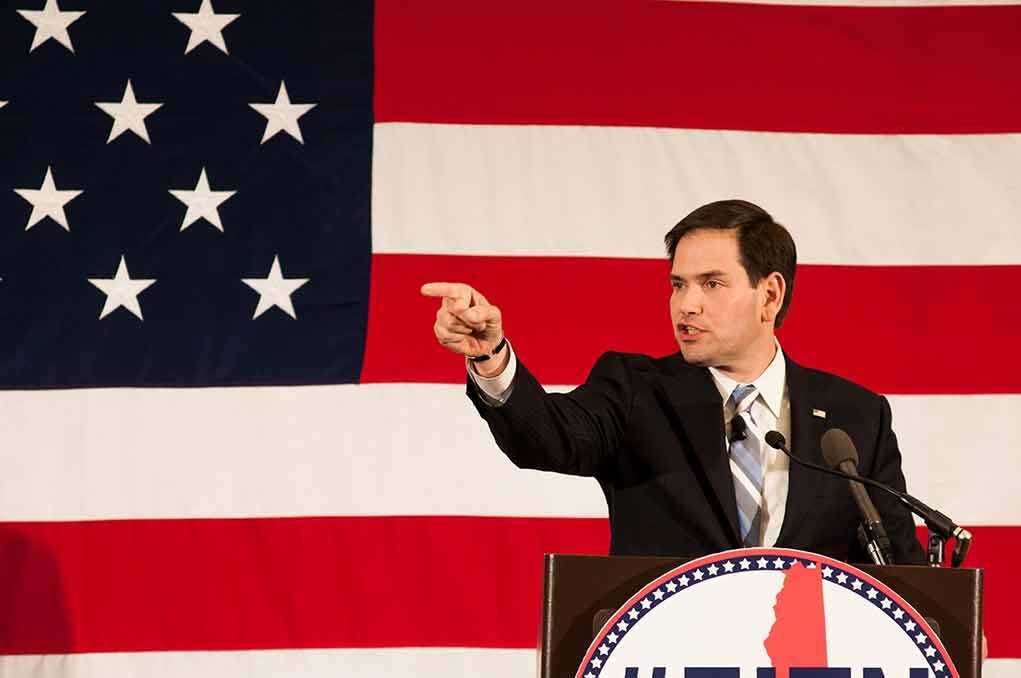
Secretary of State Marco Rubio told Iran’s United Nations delegation to leave the United States after talks stalled, signaling Washington will not reward stalling or gamesmanship.
Story Highlights
- U.S. officials say Rubio ordered Iran’s delegation to depart after negotiations broke down.
- The U.S. mission relayed the order to Iran’s mission in New York the same evening.
- Iran’s team denies expulsion and claims it left on a pre-set schedule shared on September 17.
- The clash reflects a long pattern of dueling public claims in U.S.–Iran diplomacy.
Reports Say Rubio Ordered Immediate Departure After Talks Collapsed
Axios reported that on Monday, Secretary of State Marco Rubio demanded that Iranian Foreign Minister Abbas Araghchi and his United Nations delegation leave the country after negotiations stalled, according to a United States official and a second source with direct knowledge. The Washington Examiner, Fox News, and other outlets echoed that account, describing a firm U.S. move after a weekend of little progress involving Iranian officials and Qatari mediators. Those reports frame the step as leverage when talks hit a wall.
The Hill also reported that Rubio ordered the delegation to leave immediately following the breakdown, citing United States officials and confirming that messaging went through official channels in New York. This sequence matters. When adversaries stall, delay rewards pressure tactics. By insisting the group depart, the United States drew a clear line. That signals that access to the United States during the United Nations General Assembly is not a stage for stonewalling while conflict drags on without results.
U.S. Mission Relayed Order; Timing Became Part Of The Message
Outlets reported the United States mission to the United Nations told Iran’s mission, at Rubio’s direction, that the delegation had to leave that evening. That detail underscores the tool Washington used: procedure as pressure. When talks stall, timing communicates resolve. A swift exit order avoids endless side meetings and photo ops. It also avoids letting Tehran set the pace. For readers tired of delay, that is the core: make demands, set deadlines, and enforce them.
Conservatives have seen what drift looks like: endless summits, zero outcomes, and rising risk. Here, the United States chose clarity. A firm deadline can reset leverage by showing that patience is not free. It also reminds every delegation in New York that the host nation sets terms tied to conduct. That message reaches beyond Iran. It tells other regimes that bait-and-switch diplomacy will not get extra days on American soil.
Tehran Denies Expulsion, Claims Pre‑Communicated Schedule
Iran’s mission rejected the expulsion claim and said the delegation left Monday evening per a schedule shared with the United States Department of State on September 17. Foreign Minister Abbas Araghchi posted that all Iranian diplomats who attended the United Nations General Assembly, except one who left earlier, departed as planned. He called stories about a “kicked out” expulsion fake or political spin in several outlets that repeated the denial from Tehran’s channels.
Iran’s deputy foreign minister added that one diplomat had planned to remain longer but left due to United States pressure, while insisting the rest followed the original timetable. These counterpoints aim to blunt the message of leverage. If departure was routine, then the United States did not force anything. Yet even in Iran’s account, pressure affected at least one delegate’s timing. That admission supports the core U.S. narrative: pressure was applied and it worked in practice.
Competing Narratives Are Common In U.S.–Iran Standoffs
Asharq Al-Awsat noted that dueling versions hardened fast: a United States order versus Tehran’s “on schedule” claim, as both sides vie to define what the timing means for leverage in broader disputes over nuclear activity, maritime security, and sanctions relief. This is the familiar pattern. When the facts on who left when are close, the real fight is over what the timing says about power. The United States wanted a clear signal that stalling has a cost.
For Americans who value strength, this approach aligns with common sense. Set terms, enforce them, and do not subsidize delay. President Trump’s administration is right to back talks only when they move. If Tehran chooses to stall, the United States should close the room, not extend the clock. That protects American credibility, deters bad actors, and honors families who expect their government to be firm, fair, and fast when vital interests are on the line.
Sources:
redstate.com, thehill.com, washingtonexaminer.com, bostonherald.com, democrata.es, yahoo.com, tass.com