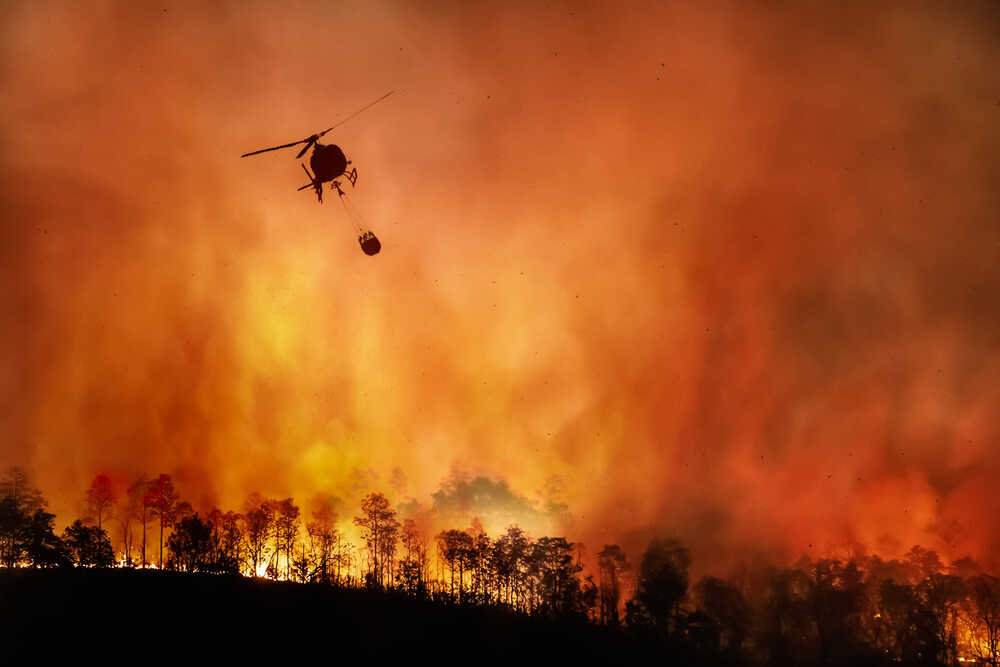
Victoria, Australia, is grappling with multiple uncontrolled bushfires fueled by a catastrophic heatwave, which authorities warn is the worst in two decades. The unprecedented heat dome threatens to break the deadly 2009 Black Saturday temperature record as three major fire fronts, including the massive Longwood and Otways blazes, overwhelm the state’s emergency resources, forcing thousands of residents to evacuate and prompting a declared state of disaster.
Story Highlights
- Over 1,000 households evacuated along Great Ocean Road as three major fires burn uncontrolled across Victoria.
- Temperatures forecast to reach 44-49°C, threatening to break the 48.8°C Black Saturday record from 2009.
- Longwood fire consumes over 140,000 hectares while Otways blaze burns 10,000 hectares with “too late to leave” warnings issued.
- Prolonged heat dome creates worst conditions in nearly 20 years, with 7-8 consecutive days above 40°C.
- State of disaster declared as season’s fires destroy over 300 structures and burn 300,000+ hectares since early January.
Multiple Emergency-Level Fires Overwhelm Victoria
Victoria faces simultaneous emergency-level bushfires across three major fronts as a record-breaking heatwave grips the state. The Gellibrand fire in the Otways region has consumed 10,000 hectares and forced over 1,000 households to evacuate along the iconic Great Ocean Road, approximately 200 kilometers southwest of Melbourne. Authorities issued “too late to leave” warnings for Gellibrand residents on January 27 as flames approached residential areas. Meanwhile, the massive Longwood fire has scorched over 140,000 hectares in central Victoria, and the Walwa fire burns out of control in the northeast near Nariel Valley, threatening rural communities with no containment in sight.
At least 400 homes have been destroyed in Victoria's scorching summer as exhausted fire crews step up their fight to contain an out-of-control blaze in the Otways. The record heatwave pushed power supplies to the brink, leaving more than 100,000 properties without power.… pic.twitter.com/PV4ljeEs0y
— 7NEWS Melbourne (@7NewsMelbourne) January 28, 2026
Unprecedented Heat Dome Fuels Catastrophic Conditions
A stationary high-pressure system has created a prolonged “heat dome” over Victoria, compressing air and building heat over seven to eight consecutive days with temperatures exceeding 40°C—the longest such streak since the 1930s. Melbourne faces forecasts of 45°C while the rural town of Ouyen threatens to surpass 49°C, potentially breaking the 48.8°C record set during Black Saturday in 2009, when 173 people perished. Emergency Management Commissioner Tim Wiebusch described these as the worst heat conditions in 20 years. This dangerous weather pattern comes after Australia recorded its fourth-warmest year in 2025, with temperatures 1.23°C above normal, creating ideal conditions for rapid fire spread amplified by gusty winds and bone-dry vegetation.
Massive Emergency Response Struggles Against Elements
Over 300 firefighters supported by six aircraft are battling the Otways blaze alone, while resources are stretched thin across multiple fronts. Country Fire Authority Chief Officer Jason Heffernan warned that anticipated wind changes around 5 p.m. on January 26 would cause the most significant damage, pushing flames in unpredictable directions. State Control Centre spokesperson Reegan Key acknowledged that containment remains “extremely difficult” under current conditions, with fires making big runs through forested terrain. Authorities conducted door-to-door notifications across the Greater Otways region, alerting over 10,000 phones and establishing relief centers in Colac. A statewide total fire ban remains in effect, and numerous Otways National Park sites have closed to public access as firefighters work around the clock.
Season’s Devastation Prompts Government Review
The current emergency follows an already devastating start to the 2025-26 bushfire season. Between January 7-9, catastrophic fire danger ratings hit the Wimmera, Northern Country, and North Central districts, with fires destroying over 300 structures and burning more than 300,000 hectares. Premier Jacinta Allan declared a state of disaster covering 18 areas on January 9 and announced plans for an independent review of preparedness and Country Fire Authority resources. The scale of destruction—including 20-plus buildings lost in Ruffy and Natimuk, two homes destroyed in the December Markwood fire, and one firefighter injured—has raised concerns about whether Victoria learned adequate lessons from past catastrophes like Black Saturday. Economic impacts extend beyond immediate property losses, devastating farmland in the Wimmera, crippling tourism along the Great Ocean Road, and displacing over 1,000 families who now face uncertain futures.
The convergence of record-breaking heat, multiple uncontrolled fires, and strained emergency resources underscores the vulnerability of communities when nature unleashes its full fury. As Victoria’s Bureau of Meteorology meteorologists point to climate trends and extended heat patterns, the immediate focus remains on protecting lives and property. Residents in threatened areas face life-or-death decisions about when to evacuate, with authorities emphasizing that leaving early offers the only guarantee of safety. The coming days will test whether Victoria’s emergency management systems can withstand conditions that rival the state’s darkest disaster in modern history.
Watch the report: Out-of-control bushfires threaten properties in Victoria’s Otways | ABC NEWS
Sources:
- Bushfires continue to burn across Victoria | The Saturday Paper
- Records tumble as Victorian firefighters battle out-of-control blazes — as it happened – ABC News
- Victorians urged to evacuate Otways as massive fire threatens to spread east towards more than 1,000 homes | Victoria bushfires 2026 | The Guardian
- Bushfires could ‘run again’, as locals told to stay vigilant