Fan outrage over ticket scalping for a global pop sensation has turned into a surprising diplomatic request. Following massive demand for BTS concert tickets in Mexico City—where supply vastly outstripped seats and resale prices skyrocketed—Mexican President Claudia Sheinbaum publicly asked South Korea’s president for help in securing additional shows. The unusual move highlights how quickly a consumer issue and a cultural phenomenon can become a matter of state action.
Story Highlights
- Mexican President Claudia Sheinbaum publicly asked South Korea’s president to help bring more BTS concerts to Mexico after massive ticket demand.
- Roughly 1 million fans reportedly chased about 150,000 tickets for three Mexico City shows planned for May 2026, fueling public backlash.
- Mexico’s consumer watchdog opened a probe into Ticketmaster and moved against resale platforms over alleged abusive practices.
- Resale listings reportedly surged far beyond original prices, intensifying pressure for tighter ticketing rules and enforcement.
A Pop-Culture Frenzy Turns Into High-Level Diplomacy
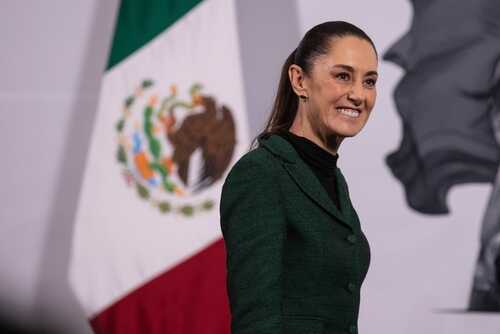
Mexican President Claudia Sheinbaum used a public morning appearance to say she had formally asked South Korean President Lee Jae Myung to help facilitate additional BTS concerts in Mexico. The request followed a ticket-buying stampede tied to the group’s 2026 world tour, with three Mexico City dates scheduled for May. The unusual move underscored how rapidly a consumer dispute and youth-driven cultural phenomenon can land on a president’s desk.
Available reporting indicates demand dwarfed supply: about 1 million fans attempted to buy tickets for roughly 150,000 seats across the three scheduled shows. Initial prices were reported around $100, but resale postings climbed dramatically, with at least some reports placing listings above $5,300 and other figures appearing inconsistent or likely transcript errors. Regardless of the precise ceiling, the core issue was clear—ordinary fans felt priced out and blamed the ticketing ecosystem.
[INFO] The President of Mexico said she wrote a letter to the Prime Minister of Korea asking for more dates on #BTS's tour in Mexico 🇲🇽 pic.twitter.com/vvBe5ibzJw
— BTS Charts Daily (@btschartsdailyc) January 26, 2026
Consumer Watchdog Targets Ticketing Practices and Resale Markets
Mexico’s consumer protection authority, Profeco, moved beyond complaints and into enforcement posture. Reporting indicates Profeco launched an investigation into Ticketmaster related to the BTS ticketing episode and sanctioned resale sites including StubHub and Viagogo for what it described as “abusive practices.” Profeco also signaled it was working on tighter ticket rules, including measures around fixed pricing and clearer terms on where and how tickets can be sold.
This is where the story becomes bigger than a boy band. When scarcity meets digital middlemen, the public is often told “that’s just the market.” But governments tend to intervene when the market looks rigged—especially when consumers believe bots, opaque fees, and resale pipelines are turning entertainment into an insider’s game. The research does not provide final findings from the investigation, so the outcome remains unknown, but the regulatory pressure is already shaping the narrative.
BTS’s Return After Military Service Supercharged Demand
BTS paused group activities starting in 2022 as members completed mandatory South Korean military service, and their 2026 comeback has been treated as a global event. The research points to a new album planned for March 2026 and a world tour beginning in spring, with Mexico City booked for May. With Mexico described as having one of K-pop’s largest fanbases, the predictable result was a surge in demand that ticket platforms were not prepared to satisfy.
What’s Known, What Isn’t, and Why It Matters Politically
No response from South Korea’s government, BTS, or the group’s management is included in the available research, and no additional Mexico dates have been confirmed. That matters because the diplomatic request may be more symbolic than operational—concert routing decisions usually depend on promoters, venues, contracts, and logistics. Still, Sheinbaum’s decision to elevate the issue reflects how leaders sometimes seek public credit for “fighting for the little guy,” even in cultural disputes.
For American readers watching from the outside, the broader lesson is about governance priorities and state power. A government that can pressure industries over concert tickets can also pressure industries in far more serious contexts. The research centers on consumer protection and ticketing fairness, not ideological crackdowns, but the mechanism is the same: regulatory agencies, sanctions, and new rules. The key question is whether enforcement stays narrow and transparent—or expands into a habit of top-down control.
For now, the story stands as an unusual collision of fandom, commerce, and state action. Millions of young fans chasing scarce seats created a political problem that Mexico’s president chose to address publicly and diplomatically. Whether it produces more shows or simply tougher ticket rules, the immediate driver is the same: public anger at a system that appears to reward connected resellers while ordinary families and working people get shut out.
Watch the report: Mexico’s Sheinbaum appeals to South Korea for more BTS concerts | REUTERS
Sources:
- Mexico president asks South Korea for more BTS concerts: ‘Everyone wants to go’
- Mexico president asks Korean counterpart for more BTS concerts | Reuters
- Mexico’s President Asks Korean Leader for More BTS Dates: ‘A Million Youngsters Want to Buy Tickets’
- Mexico’s president calls on Seoul’s help to add BTS concerts as demand surges – KED Global