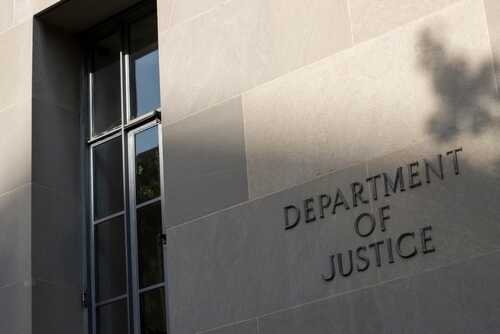
Is justice being served or undermined as the DOJ recommends just a one-day sentence for Brett Hankison, a former officer convicted in the Breonna Taylor case?
At a Glance
- DOJ recommends a one-day prison sentence for Brett Hankison.
- Hankison was convicted of violating Breonna Taylor’s civil rights.
- The recommendation has sparked public outrage and debate.
- Sentencing hearing is delayed until July 21, 2025.
- Advocates warn this sets a dangerous precedent on police accountability.
DOJ’s Controversial Recommendation
The Department of Justice has ignited a nationwide firestorm by recommending that former Louisville officer Brett Hankison serve just one day in prison for violating Breonna Taylor’s civil rights. Although Hankison faced a potential life sentence, the DOJ argued that his actions—firing blindly into Taylor’s apartment during a botched police raid—did not directly cause her death, as he did not fire the fatal shots.
This lenient proposal has enraged Taylor’s family, civil rights advocates, and a public still grappling with the systemic failures that led to her killing. Critics argue that reducing Hankison’s accountability to a single day behind bars trivializes both the harm done to Taylor’s family and the broader crisis of police violence in America.
Watch a report: DOJ recommends no prison time for ex-officer convicted in Breonna Taylor raid, ABC News
Public Outcry and Calls for Accountability
Taylor’s family and their legal team have condemned the DOJ’s stance, describing the recommendation as “an affront to justice.” Louisville Mayor Craig Greenberg has publicly stated that Hankison’s conduct warrants a far more serious sentence, reflecting the gravity of the offense and the deep trauma inflicted on the community.
This comes at a critical juncture in America’s ongoing reckoning with police brutality. Many fear that a mere one-day sentence sends a devastating signal: that law enforcement officers can violate civil rights without facing meaningful consequences. Activists warn that such leniency risks eroding public trust in the justice system and derailing the momentum for police reform.
Implications for Police Accountability
The DOJ’s recommendation could have far-reaching implications for the future of police accountability. If Hankison walks away with just 24 hours of incarceration, many worry it could embolden officers to act recklessly, knowing that the justice system will shield them from serious penalties—even in high-profile cases.
Observers also point to political considerations influencing prosecutorial decisions, with some criticizing DOJ leadership, particularly under Civil Rights Division head Harmeet Dhillon, for perceived softness on law enforcement misconduct. Yet, the ultimate decision lies with U.S. District Court Judge Rebecca Grady Jennings, who will weigh the DOJ’s proposal when Hankison returns to court on July 21, 2025.
The Nation Watches the Judge
The upcoming sentencing will test not only the judiciary’s independence but also the broader societal commitment to civil rights enforcement. For Breonna Taylor’s family, and for communities nationwide that rallied under her name, the judge’s decision will either reaffirm or shatter faith in the promise of justice.
The eyes of the nation—and the world—are now fixed on Judge Jennings. Whether she upholds or rejects the DOJ’s eyebrow-raising recommendation could determine how seriously the U.S. treats civil rights violations by law enforcement in the years ahead.