
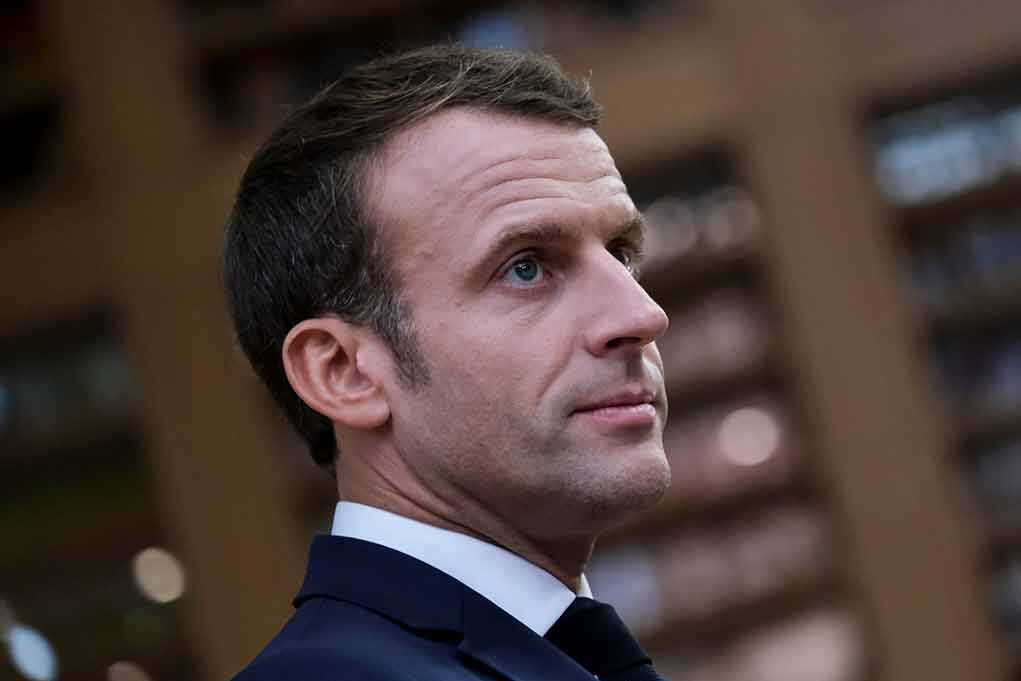
French President Emmanuel Macron used the world stage to call Gaza “a spectacle that shames us all,” challenging claims that peace has restored basic aid access.
Story Snapshot
- Macron said Gaza remains blocked to needed aid despite “peace” claims.
- He framed Gaza as a test of global credibility and action, not talk.
- Reports placed the remarks in his United Nations General Assembly address.
- He tied the crisis to respect for law, humanitarian delivery, and real results.
Macron’s UN Line: Gaza “Shames Us All” and Aid Still Stalled
Reuters reported that President Emmanuel Macron told the United Nations General Assembly on Sept. 22 that not a single humanitarian corridor in Gaza had reopened, even as some leaders claimed peace had been achieved. France24 added that Macron called the situation “a spectacle that shames us all,” and questioned what global credibility is worth without action that restores humanitarian deliveries. His remarks focused on the basic test of aid access and safety for civilians, not speeches or optics.
Macron’s line cut to the core: grand statements mean little if trucks cannot move and families cannot get food and medicine. His framing turned Gaza into a measure of whether the international system can deliver results. He argued that respect for law must include real corridors that actually open, not paper promises. He pressed for clear steps that protect civilians and allow aid workers to do their jobs without threat or delay on the ground.
Why His Remark Matters for U.S. Policy and Allies
Macron’s challenge lands in the middle of complex regional diplomacy that affects American interests and partners. When a top ally says the aid has not restarted despite “peace” claims, it raises pressure on all parties to show proof of access. Washington works with Israel, Egypt, and others to balance security and relief. If corridors remain shut, trust erodes fast, and so does the case that current plans are working as promised for civilians who need help now.
Conservatives will hear a familiar theme: results beat rhetoric. Americans expect clarity, secure borders, law and order, and accountability. The same rules apply abroad. If leaders talk peace but aid routes do not open, then the plan is not done. Macron’s words underline that basic point. Deliver food, water, and medical care safely, or stop pretending the crisis has eased. That is a standard our allies should meet, and one our government should insist on every single day.
The UN Stage: From Speeches to Measurable Action
Macron used the United Nations podium to link Gaza aid access to the world’s credibility. He said the job is not to admire a problem, but to fix it with clear lanes, security guarantees, and steady convoys. This is a practical test with simple benchmarks: Are routes open, are trucks moving, and are civilians safer today than yesterday? His appeal placed responsibility on governments to enforce the terms they announce and verify that relief is actually reaching people.
"A year ago, here in this very hall, about a dozen states had recognised Palestine. I hear the cynicism of some people: 'Recognition is just a piece of paper, look at the reality'," Macron said, banging his fist on the podium in his last speech at the UN before stepping down next… pic.twitter.com/BjU5G8eySL
— The New Arab (@The_NewArab) September 23, 2026
This pattern repeats every year at the General Assembly: big claims, then hard questions. Macron’s statement fit that script, but it came with a tight focus on deliveries and protection. That is where talk meets reality. The United States can lead by pushing partners to meet those concrete goals and by tracking results we can see. When aid flows, tensions ease. When it stalls, chaos grows, and bad actors exploit the vacuum for terror, propaganda, and more civilian harm.