
A new “Make America Healthy Again” investment pitch tied to RFK Jr.’s family is testing whether Washington can pursue reform without turning policy momentum into private opportunity.
Quick Take
- Reports say a son of HHS Secretary Robert F. Kennedy Jr. launched an investment fund explicitly linked to the MAHA movement, even as MAHA policy efforts expand across federal agencies.
- Federal health messaging emphasizes a chronic-disease emergency, with HHS citing widespread illness among adults and children as the core rationale for MAHA initiatives.
- The Trump administration’s MAHA-aligned actions include a $700 million regenerative agriculture pilot announced with USDA and CMS participation, plus rural health funding and state SNAP waiver incentives.
- Key details about the alleged fund—who exactly runs it, its size, and its holdings—are not established in the provided materials, leaving conflict-of-interest questions largely unanswered.
A MAHA-branded fund raises new “revolving door” questions
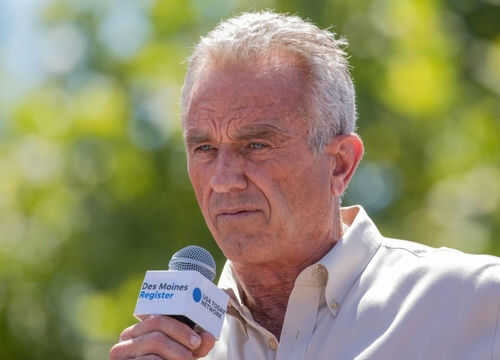
It describes a private investment fund launched by one of RFK Jr.’s sons and explicitly tied to the “Make America Healthy Again” brand that Kennedy now leads as HHS Secretary in President Trump’s second term. The political sensitivity is straightforward: MAHA is no longer a campaign slogan but a federal policy agenda, and any family-linked financial vehicle invites scrutiny about influence, access, and perception.
The challenge for the administration is that even reform-minded voters who like MAHA’s stated goals can recoil at optics that resemble the insider culture Americans associate with the “deep state” and Washington’s permanent class. Based on the provided materials, the fund’s launch is presented as an effort to “capitalize” on MAHA-related changes in food, health, and agriculture. Without verified fund disclosures here, the story remains more about risk than proven wrongdoing.
What MAHA claims to be solving, using HHS’s own numbers
HHS frames MAHA around chronic disease rather than traditional partisan fights, citing statistics such as 6 in 10 adults living with chronic disease, about 40% of adults described as diabetic or prediabetic, and about 1 in 4 children living with allergies. Those claims, as presented on the MAHA page, are designed to justify a whole-of-government shift in food systems, prevention, and medical incentives—an approach that can win bipartisan interest when it stays focused on measurable outcomes.
MAHA’s appeal to many conservatives is that it sounds like a reset from top-down social engineering toward practical health basics: food quality, transparency, and personal responsibility supported by clearer rules. At the same time, Kennedy’s history as an activist figure makes implementation politically fragile, because critics are primed to assume ideology or personal networks are driving decisions. That context is why any MAHA-adjacent business venture, especially a family-linked one, becomes instantly controversial.
The policy machinery: agriculture pilots, SNAP waivers, and rural health dollars
The most concrete MAHA-related policy development in the supplied research is the administration’s December 10, 2025 announcement of a $700 million “farmer-first” regenerative agriculture pilot. The event, featuring Kennedy alongside Agriculture Secretary Brooke Rollins and CMS Administrator Dr. Mehmet Oz, links health outcomes to how food is produced and distributed. The initiative is described as using mechanisms including SNAP waivers and rural health funding streams, placing states and program administrators at the center.
That design matters politically. Using waivers and state participation can align with conservative preferences for federalism, but it also creates new gatekeepers: regulators, grant scorers, and approved vendors. It also references a larger rural health funding push and the claim of increased federal support—big numbers that will draw attention from watchdogs who worry that “pilot programs” can become permanent spending channels. If MAHA is to maintain credibility, it will need clean rules and visible accountability.
Momentum—and skepticism—after MAHA’s first year in the spotlight
An independent assessment characterizes MAHA as influential but showing “cracks” as it tries to convert big ideas into executable policy. That critique is less about whether Americans should be healthier—most agree on that—and more about whether a fast-expanding agenda can stay disciplined across agencies and political constituencies. Even sympathetic voters tend to lose patience when slogans outrun results, especially when budgets and bureaucracies grow in the process.
The alleged MAHA-tied investment fund collides with that skepticism at the worst possible time. If MAHA is “exploding” in influence, then any perception that insiders can invest ahead of policy shifts will harden opposition and energize Democrats looking for ethics angles. The available research does not provide the fund’s launch date, assets under management, or an identified son, so readers should treat sweeping claims cautiously until formal disclosures or reporting provide specifics.
Why this matters beyond one family: trust, transparency, and limited government
The broader story is a trust test for a federal government that many Americans—right and left—already believe works best for connected elites. MAHA’s stated mission is ambitious and, in parts, popular: fewer chronic illnesses, healthier kids, and a food system that rewards quality. But conservatives who want limited government will still demand bright lines between public authority and private gain, especially when branding and influence are involved.
For now, the cleanest conclusion supported by the provided materials is also the simplest: MAHA is moving from rhetoric into programs with real money and real winners and losers, and that shift inevitably attracts investors. If a family-linked fund is truly being marketed as a MAHA play, it will increase pressure on HHS and the White House to publish clear ethics guardrails, recusals where appropriate, and transparent program criteria so reforms can stand on results, not relationships.
Sources:
https://www.hhs.gov/maha/index.html
https://www.statnews.com/2025/08/25/rfk-maha-1-year-momentum-cracks-forming/