

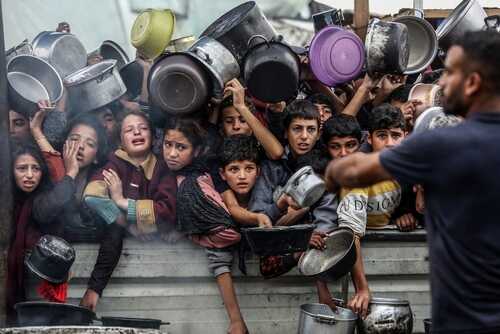
The United Nations has warned that famine in Gaza is expanding rapidly as aid groups accuse Israel’s continuing siege of cutting off essential food, medicine, and fuel supplies.
At a Glance
- The UN reported worsening famine conditions in northern Gaza and growing hunger in central and southern regions.
- Aid organizations say Israeli restrictions are preventing sufficient humanitarian deliveries.
- The World Food Programme confirmed only a fraction of needed aid has reached civilians.
- Israel maintains its blockade citing security concerns, including weapons smuggling.
- Civilian casualties and malnutrition rates are rising, with international pressure mounting.
UN’s Expanding Warning
The United Nations said the humanitarian situation in Gaza has deteriorated sharply in recent weeks, with signs of famine spreading beyond the north into other parts of the territory. According to UN relief officials, nearly half of Gaza’s population is at risk of extreme hunger, while children are suffering acute malnutrition at rates previously unseen in the enclave. The warning emphasized that the crisis is worsening due to restrictions on aid flows, limited fuel supplies, and ongoing military operations that have destroyed infrastructure.
The UN Relief and Works Agency stated that its capacity to distribute food has been severely constrained. Warehouses remain empty, and convoys face long delays at checkpoints. The agency also reported that hospitals are overwhelmed by both wounded civilians and patients suffering from preventable hunger-related diseases.
Watch now: Famine Declared in Gaza City for First Time by UN-Backed Agency · YouTube
Aid Groups Condemn Blockade
International aid organizations have echoed the UN’s alarm, accusing Israel of using the blockade to choke off supplies to Gaza’s 2.3 million residents. Groups including Oxfam and Médecins Sans Frontières reported that only a small percentage of trucks carrying food and medicine were granted entry in August. They argue that the level of humanitarian assistance allowed is insufficient to avert famine, particularly in densely populated areas where markets have collapsed and food prices have skyrocketed.
Israel, meanwhile, has defended its restrictions, insisting that aid must be carefully monitored to prevent weapons and military equipment from being smuggled into Gaza. Officials in Tel Aviv maintain that humanitarian deliveries are permitted daily but admit that strict inspections slow the process. The government also blames Hamas for stockpiling supplies and preventing equitable distribution among civilians.
Global Response and Pressure
The crisis has prompted international condemnation, with several governments calling on Israel to ease its blockade. The European Union urged “immediate humanitarian access,” while the United States said it was pressing Israel to expand aid deliveries. Regional actors, including Egypt and Qatar, have been facilitating negotiations, but talks have yet to produce meaningful changes.
Meanwhile, UN Secretary-General António Guterres reiterated his plea for an immediate ceasefire, warning that Gaza’s civilians cannot withstand the double burden of conflict and hunger. He stressed that famine is not a natural disaster but a consequence of human decisions, calling for all parties to prioritize humanitarian needs.
The humanitarian crisis in Gaza is increasingly seen as a pivotal issue in the broader conflict, as the question of access to food and medicine becomes as politically charged as territorial disputes. Analysts warn that if the blockade remains in place at current levels, famine could become widespread by the end of the year, worsening instability across the region.
Sources
Al Jazeera
United Nations
World Food Programme
Oxfam
Médecins Sans Frontières